
California Religious Accommodation Compliance for Employers
Michael Trust founded Michael Trust Law, APC after more than 35 years in HR leadership across entertainment, healthcare, higher education, finance, banking, solar energy, and other industries, including managing approximately 35,000 disability and leave-of-absence cases. He holds the SPHR, PHRca, and SHRM-SCP credentials. The PHRca is a California-specific HR credential focused on California employment law and HR practice. The SPHR, PHRca, and SHRM-SCP are HR credentials, not State Bar certifications. Michael Trust does not hold a State Bar certified specialization, and currently the State Bar of California does not offer a specialization in employment law. According to HRCI’s published pass-rate statistics at https://www.hrci.org/pass-rates, the PHRca has the lowest pass rate of all HRCI credentials (47% as of December 31, 2025, compared with 71% to 84% for HRCI’s other certifications), and only 293 candidates worldwide tested for it in 2025. That HR-systems background helps identify HR process issues early, which can shape legal analysis on both sides. That background is relevant to religious accommodation matters, where the employer’s intake, review of alternatives, and written record bear directly on whether it can make the showing that Cal. Gov’t Code § 12940(l)(1) requires.
Employer Religious Accommodation Compliance
Michael Trust Law, APC advises California employers on religious accommodation requests, dress and grooming policies, and scheduling practices.
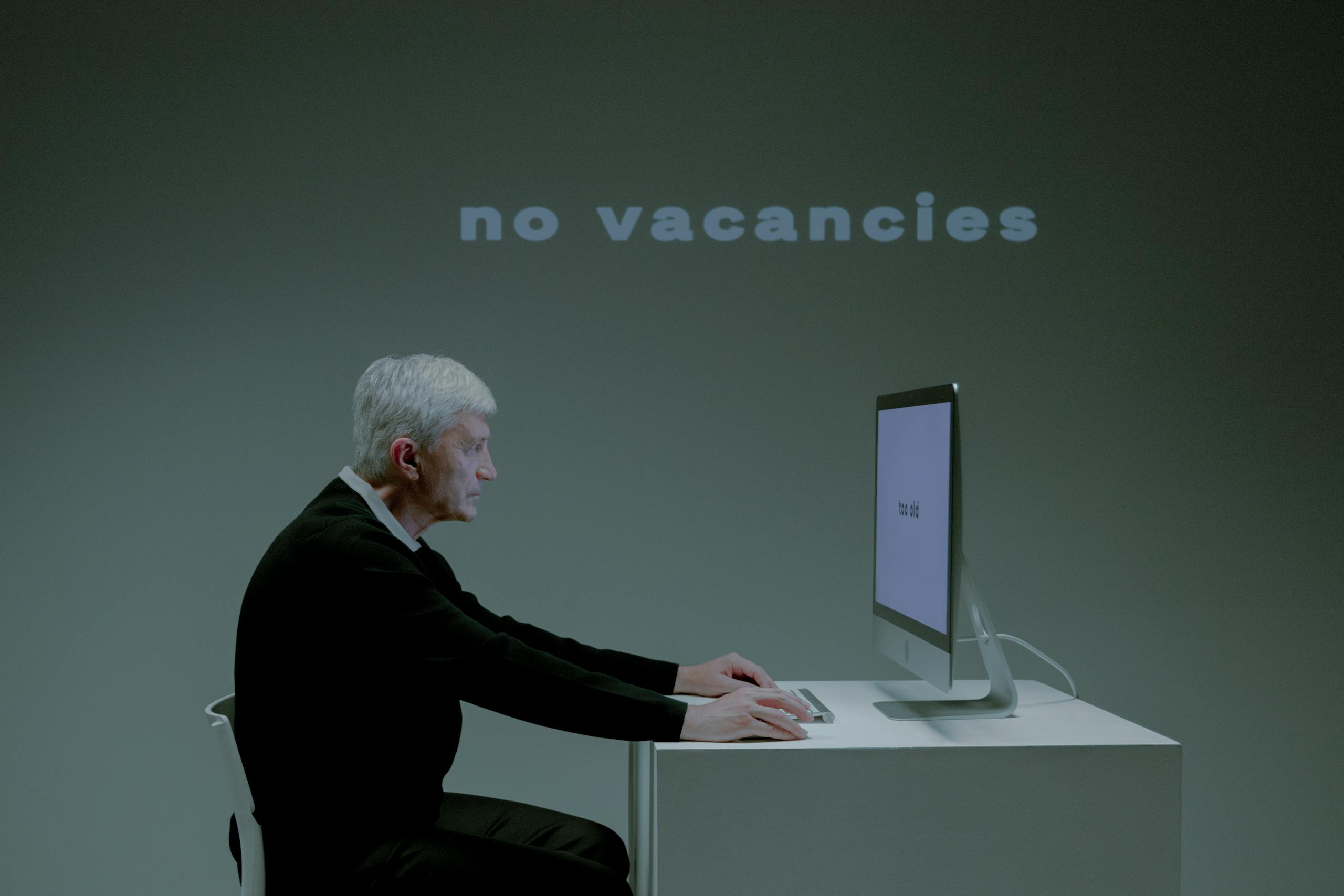
A representative religious accommodation issue for an employer involves an employee who asks to change a schedule, a dress code, or a duty because of a religious belief or observance, and a decision whether the employer can show that it explored alternatives and that accommodation would impose undue hardship.
Religious Accommodation Obligations for California Employers
California’s Fair Employment and Housing Act makes it unlawful for an employer with five or more employees to discharge, refuse to hire, or otherwise discriminate against a person because of a conflict between the person’s religious belief or observance and an employment requirement, unless the employer demonstrates that it explored any available reasonable alternative means of accommodation and could not accommodate without undue hardship (Cal. Gov’t Code §§ 12926(d), 12940(l)(1)). “Undue hardship” means “an action requiring significant difficulty or expense” weighed against five statutory factors, so an employer should be able to show the request, the alternatives it considered, and the specific facts behind any denial (Cal. Gov’t Code § 12926(u)).
What California Law Requires of an Employer
The statute protects “religious creed,” which it defines to “include all aspects of religious belief, observance, and practice, including religious dress and grooming practices.” Cal. Gov’t Code § 12926(q). The Civil Rights Council’s regulation adds that religious creed “includes any traditionally recognized religion as well as beliefs, observances, or practices, which an individual sincerely holds and which occupy in his or her life a place of importance parallel to that of traditionally recognized religions.” Cal. Code Regs. tit. 2, § 11060.
Three rules follow. First, an employer may not refuse to hire, discharge, or otherwise disadvantage a person because of a conflict between religious belief or observance and a job requirement unless it makes the showing described in Cal. Gov’t Code § 12940(l)(1). Second, the regulation states that “[r]efusing to hire an applicant or terminating an employee in order to avoid the need to accommodate a religious practice constitutes religious creed discrimination.” Cal. Code Regs. tit. 2, § 11062. Third, an employer may not “retaliate or otherwise discriminate against a person for requesting accommodation under this subdivision, regardless of whether the request was granted.” Cal. Gov’t Code § 12940(l)(4).
The statute’s express interactive-process duty is written for a request “by an employee or applicant with a known physical or mental disability or known medical condition.” Cal. Gov’t Code § 12940(n). For a religious request, the statute instead places the burden on the employer to demonstrate that it “explored any available reasonable alternative means of accommodating the religious belief or observance.” Cal. Gov’t Code § 12940(l)(1). A written record of the conversation with the employee is the practical way to make that showing.
The Act does not reach every religious organization. The definition of “employer” excludes “a religious association or corporation not organized for private profit.” Cal. Gov’t Code § 12926(d). Another section narrows that exclusion for certain health care employment and lets a religious-affiliated nonprofit whose sole or primary activity is an educational institution restrict employment to individuals of a particular religion, while leaving that nonprofit subject to the Act in all other respects. Cal. Gov’t Code § 12926.2(c), (f). An organization that believes one of these provisions applies should consult with counsel before it relies on it. [NEW; for Michael’s approval; § 12926(d) and § 12926.2 read on Westlaw November 7, 2026.]
Dress, Grooming, Scheduling, and Sabbath Requests
The statute names these requests directly. “Religious belief or observance” includes, but is not limited to, “observance of a Sabbath or other religious holy day or days, reasonable time necessary for travel prior and subsequent to a religious observance, and religious dress practice and religious grooming practice.” Cal. Gov’t Code § 12940(l)(1). Religious dress practice is “construed broadly to include the wearing or carrying of religious clothing, head or face coverings, jewelry, artifacts, and any other item that is part of an individual observing a religious creed,” and religious grooming practice covers “all forms of head, facial, and body hair that are part of an individual observing a religious creed.” Cal. Gov’t Code § 12926(q). A dress code or appearance standard must “take into account” those practices. Cal. Code Regs. tit. 2, § 11062(c)(2).
Two statutory limits matter in practice. An accommodation of religious dress or grooming “is not reasonable if the accommodation requires segregation of the individual from other employees or the public.” Cal. Gov’t Code § 12940(l)(2). And an accommodation “is not required” if it “would result in a violation of this part or any other law prohibiting discrimination or protecting civil rights.” Cal. Gov’t Code § 12940(l)(3).
For schedule conflicts, the statute lists, among the alternatives the employer must show it explored, “excusing the person from those duties that conflict with the person’s religious belief or observance or permitting those duties to be performed at another time or by another person.” Cal. Gov’t Code § 12940(l)(1). The regulation also lists “allowing time off in an amount equal to the amount of non-regularly scheduled time the employee has worked in order to avoid a conflict with his or her religious observances,” and it requires that interview and examination times “reasonably accommodate religious practices.” Cal. Code Regs. tit. 2, § 11062(a), (c)(1).
Undue Hardship and the Employer’s Record
The statute defines undue hardship as “an action requiring significant difficulty or expense, when considered in light of the following factors.” Cal. Gov’t Code § 12926(u). The factors are the nature and cost of the accommodation; the financial resources of the facilities involved, the number of persons employed at the facility, and the effect on expenses, resources, and operations; the financial resources and overall size of the covered entity and the number, type, and location of its facilities; the type of operations, including the composition, structure, and functions of the workforce; and the geographic separateness or administrative or fiscal relationship of the facilities. Id.
The regulation says the factors “include, but are not limited to” the size of the establishment and of the employer, the type of operation, the nature and cost of the accommodation, “[r]easonable notice to the employer or other covered entity of the need for accommodation,” and “[a]ny available reasonable alternative means of accommodation.” Cal. Code Regs. tit. 2, § 11062(b).
A recent published decision shows how the standard works on a record. In Smith v. Burbank Unified School District, 123 Cal. App. 5th 1172 (2026), the Court of Appeal affirmed summary judgment for a school district that granted a teacher’s religious exemption from a COVID-19 vaccination requirement and placed him on unpaid leave. The court held that “[u]npaid leave was a reasonable accommodation because it eliminated the conflict between Smith’s religious practice and the District’s requirement that he receive the COVID vaccination,” and it stated that “[t]he fact that unpaid leave necessarily resulted in segregation of unvaccinated employees does not automatically disqualify it as a reasonable accommodation.” On hardship, the court relied on the district’s sworn declaration and deposition testimony about coverage, supervision, and operational disruption, and it called the teacher’s contrary position “argument, not evidence.” The court tied its ruling to the record’s “undisputed facts about the dangers of COVID-19,” so an employer should not read the decision as approving unpaid leave for other requests.
Federal law uses a different test, and an employer that denies a request should be ready to meet both. Under Title VII, an employer must show “that the burden of granting an accommodation would result in substantial increased costs in relation to the conduct of its particular business.” Groff v. DeJoy, 600 U.S. 447, 470 (2023). Groff interprets Title VII, and California’s own definition of undue hardship is stated in Cal. Gov’t Code § 12926(u).
In practice, the record should show the date and content of the request, what the employer knew about the belief or practice, each alternative the employer considered and why it did or did not work, and the specific facts about cost, coverage, safety, or operations that support any hardship finding.
When to Contact Us
Reviewing a pending accommodation request, a dress and grooming policy, or a scheduling practice is most useful before an employer denies the request or an employee files a complaint. Michael Trust Law, APC provides compliance counsel, policy review, and defense of employment claims for California employers. Contact Michael Trust Law, APC.
No attorney-client relationship exists until a fee agreement is fully executed by all parties. See Disclaimers.
Cal. Gov’t Code § 12926(d), (q), (u); Cal. Gov’t Code § 12926.2; Cal. Gov’t Code § 12940(h), (l), (n); Cal. Code Regs. tit. 2, §§ 11060, 11062; Friedman v. Southern California Permanente Medical Group, 102 Cal. App. 4th 39 (2002); Smith v. Burbank Unified School District, 123 Cal. App. 5th 1172 (2026); Groff v. DeJoy, 600 U.S. 447 (2023)
Explore Related Employer Services
Frequently Asked Questions
Protect Your Business With a Religious Accommodation Review
Michael Trust Law, APC helps employers evaluate accommodation requests, review dress, grooming, and scheduling policies, and defend against claims. Contact Michael Trust Law, APC to discuss your situation.
Contact Michael Trust Law, APC Today